The French Lodges of Adoption, which spread through Continental Europe during the second half of the 18th century, admitted Masons and their female relatives to a system of degrees parallel, but unrelated to the original rite. In the early 20th century, these were revived as women-only lodges and later they adopted male degrees giving rise to French women’s Masonry in the 1950s.
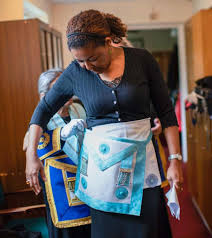
Freemasonry for women explained
Welcome to the website of HFAF Freemasonry for Women
Our Mission Statement
The Honourable Fraternity of Ancient Freemasons (HFAF) which is now known as Freemasonry for Women is a fraternity for women and organised by women. It was founded in 1913 and membership is open to women of any race or religion, who are able to profess a belief in a Supreme Being. Freemasonry is one of the world’s oldest secular fraternal societies. Freemasonry has evolved over the centuries as a system of moral guidance, characterised by allegory and symbolism. It is compatible with all religions enabling men and women of different faiths and backgrounds to follow a common purpose of living a moral life for the good of themselves and others. In the UK there are single sex fraternities such as ours and mixed Fraternities. Our precepts are taught by a series of ceremonies.
Our Order has many lodges in the UK including the Isle of Man, and as far as Carlisle in the north and south to Bournemouth and westwards to the Cotswolds. We have recently re-opened Centrum 46 as a University Lodge in Coventry and consecrated Athena Lodge 59 in Stoke-on-Trent. We have six overseas Lodges: one in Gibraltar, two in Spain, one in Eastern Europe in Bucharest, Romania, one in New Delhi in India, and the latest overseas addition to our HFAF family, America Lodge No. 57 consecrated in Washington, DC on 25th May 2019. Such is the interest in Women’s Freemasonry in India that we have been asked to consecrate two further lodges, which we were hoping to do in January 2021, but due to COVID-19 have now been postponed to at a later date. We have also been approached to open lodges in Berlin and Brazil and we now have enough members for each project to proceed to consecration in the near future.
We are participating in the University Scheme . We have opened new University Lodges in Letchworth and Newcastle-under-Lyme and also re-opened Centrum Lodge No. 46 in Coventry. Surrey Lodge No. 45 is already working as a University Lodge. We are working in conjunction with United Grand Lodge of England, (masculine Freemasonry) to promote Freemasonry in our Universities.
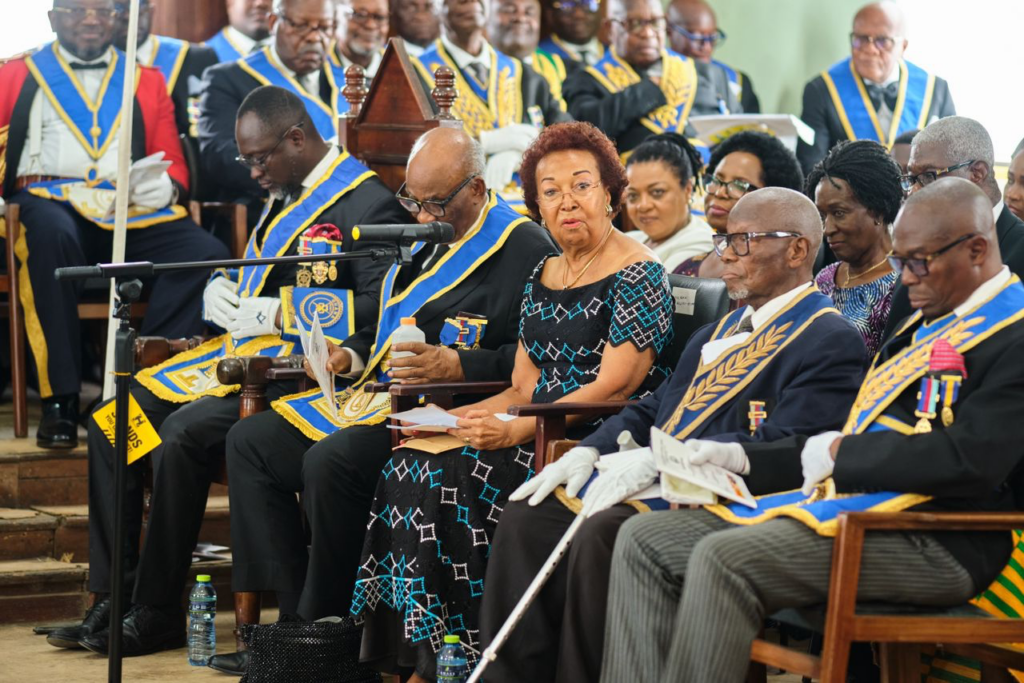
Asantehene Otumfuo Osei Tutu II has proposed the creation of Freemason Lodges tailored for women in Ghana.
He made this statement during a grand ceremony marking his 25-year tenure on the Golden Stool and in Freemasonry.
“This may be a great opportunity to discuss forming a grand lodge for females attached to the grand lodge of Ghana,” he said referencing the successful presence of female lodges within the grand lodge structures of Liberia, akin to those in England.
Read more: Grand Ceremony held to celebrate Asantehene’s 25 years in Freemasonry
The origins of women’s Freemasonry can be traced back to 18th-century pre-revolutionary France, where Lodges of Adoption welcomed women alongside men. However, these lodges diminished during the revolutionary periods.
In 1882, Maria Deraismes, a French social reformer, was invited to join a men’s Lodge, leading to the emergence of mixed lodges.
This concept later spread to the United Kingdom in 1902 through Annie Besant, eventually evolving into the Order of Women Freemasons in 1908.
Read more: ‘No regrets’ – Asantehene reflects on 25 years in Freemasonry
By 1913, a subset within the Order decided to practice the Royal Arch degree, leading to the formation of the HFAF, exclusively for women Freemasons.
This transition from co-masonry to exclusive female membership was accomplished by the mid-1930s, marking a significant development in women’s Freemasonry history.
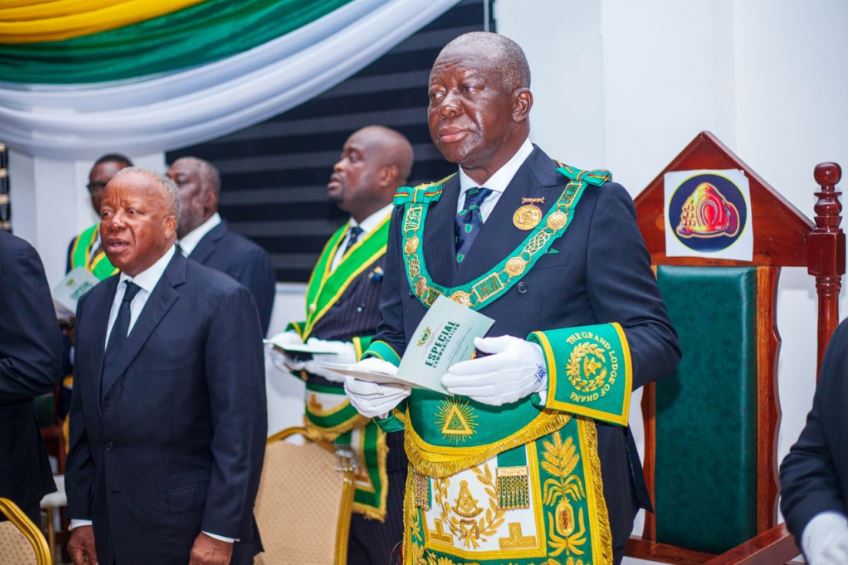
After the 25 years period is that I have no regrets on being a freem Mason experiencing what it enfolds and in fact what it means to be called a Freemason.